
Beyond Spreadsheets: Modernizing Compliance Management
Discover how advanced solutions are replacing traditional spreadsheet-based compliance management.
The Limitations of Spreadsheet-Based Compliance
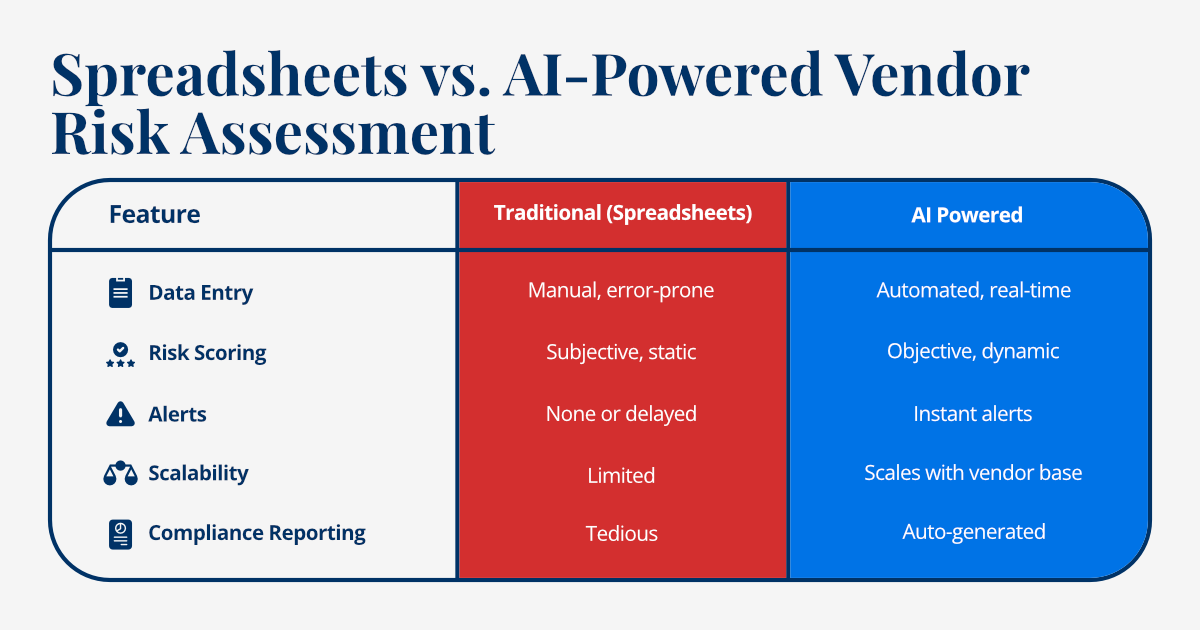
Spreadsheets have long been the backbone of compliance management, but they are increasingly becoming a bottleneck in today's complex regulatory environment. Teams relying on spreadsheets face version control issues, data integrity risks, and limited scalability—especially as controls, entities, and regulations multiply.
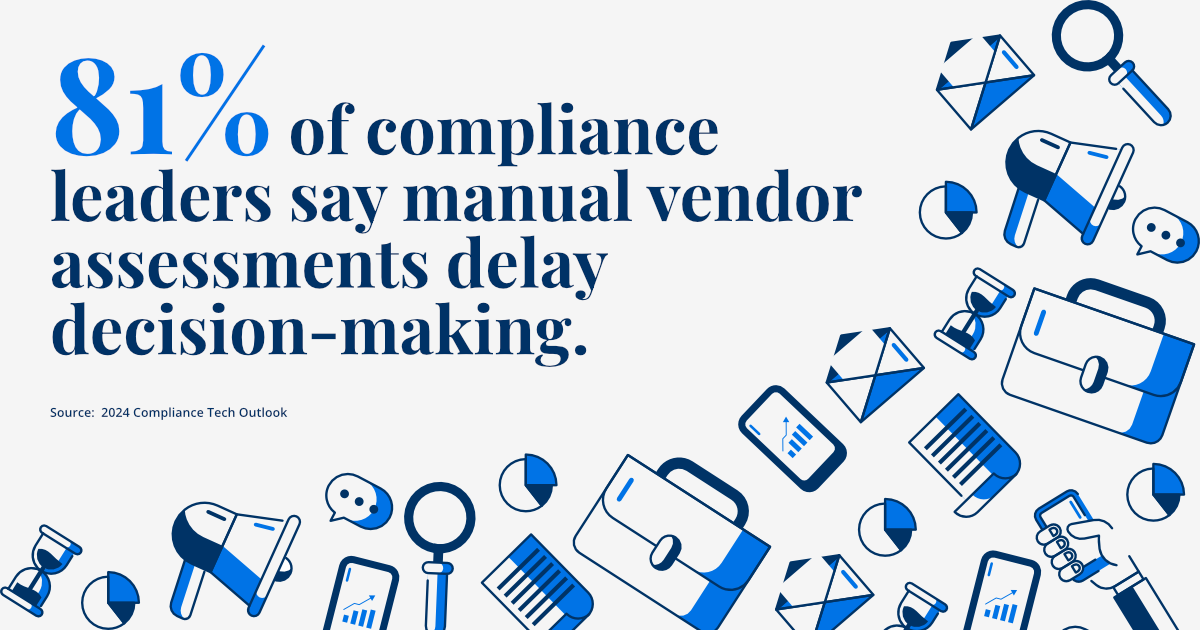
Internal surveys and industry benchmarks show that a large share of time is still spent reconciling inconsistent files, hunting for the "latest" version, and manually stitching together information for audits. Many organizations report persistent accuracy concerns and difficulty supporting real-time collaboration on critical compliance tasks.
The Evolution of Compliance Management
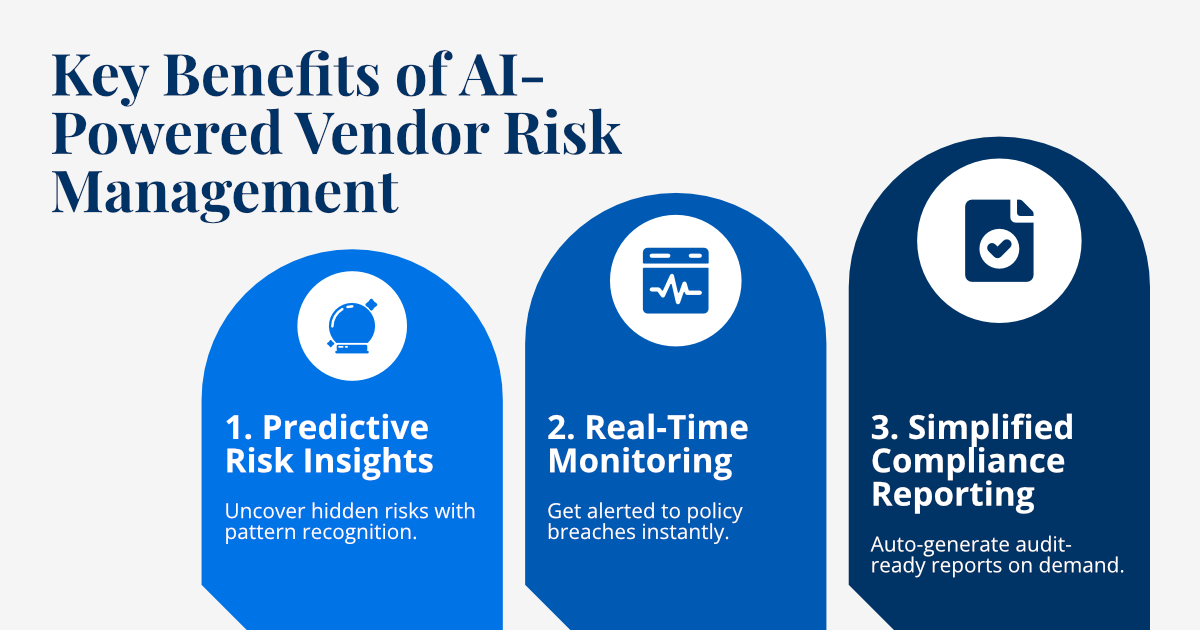
Modern compliance management platforms address these limitations by replacing manual, file-based workflows with integrated, system-driven processes.
- Real-Time Collaboration: Cloud-based workspaces let multiple stakeholders work from the same live data set, eliminating version conflicts and email chains.
- Automated Workflows: Reviews, approvals, attestations, and evidence requests can be triggered and tracked automatically instead of managed through ad-hoc reminders.
- Stronger Data Integrity: Built-in validation rules and standardized fields reduce manual entry errors and ensure consistent definitions across the program.
- Deeper Analytics: Aggregated, structured data enables trend analysis, risk heatmaps, and board-ready reporting that are difficult to maintain in spreadsheets.
Implementation Best Practices
Moving beyond spreadsheets is a multi-step journey. Organizations that succeed treat it as a structured change program rather than a simple tool swap.
- Data Migration Strategy: Inventory existing spreadsheets, define target data models, and plan migration waves that prioritize high-risk or high-value processes first.
- User Training and Onboarding: Invest in training and clear guidance so teams understand how to use new workflows and where to find the information they previously kept locally.
- Phased Implementation: Start with a subset of entities, controls, or regions to prove value, refine configuration, and build internal champions before scaling.
- Continuous Improvement: Regularly review how the platform is used, gather feedback, and update templates, workflows, and dashboards to match evolving needs.
Impact on Compliance Management
Organizations that retire spreadsheet-only approaches in favor of modern compliance platforms report measurable gains across efficiency, accuracy, and visibility.
- Efficiency Gains: Significant reductions in time spent on manual data entry, reconciliation, and report assembly.
- Error Reduction: Fewer inconsistencies and misalignments across reports thanks to centralized rules and automated validation.
- Better Visibility: Real-time dashboards and standardized reporting provide a clearer view of control performance and open issues.
- Cost Savings: Lower effort per audit and per control cycle, along with reduced reliance on one-off manual interventions.
Conclusion: Embracing Modern Compliance Management
Leaving spreadsheets behind is ultimately about resilience and scalability. By adopting modern compliance management solutions, organizations can shift from reactive fire drills to proactive, data-driven oversight—supporting faster decisions, stronger controls, and a more sustainable workload for teams.
The future of compliance belongs to organizations that can effectively leverage technology to transform their approach from manual tracking to continuous assurance, turning compliance from a burden into a strategic advantage.