
The Human Side of Audit Automation: Empowering Your Compliance Team
Discover how automation enhances rather than replaces human expertise in compliance management.
Automation as an Enabler: Enhancing Human Expertise
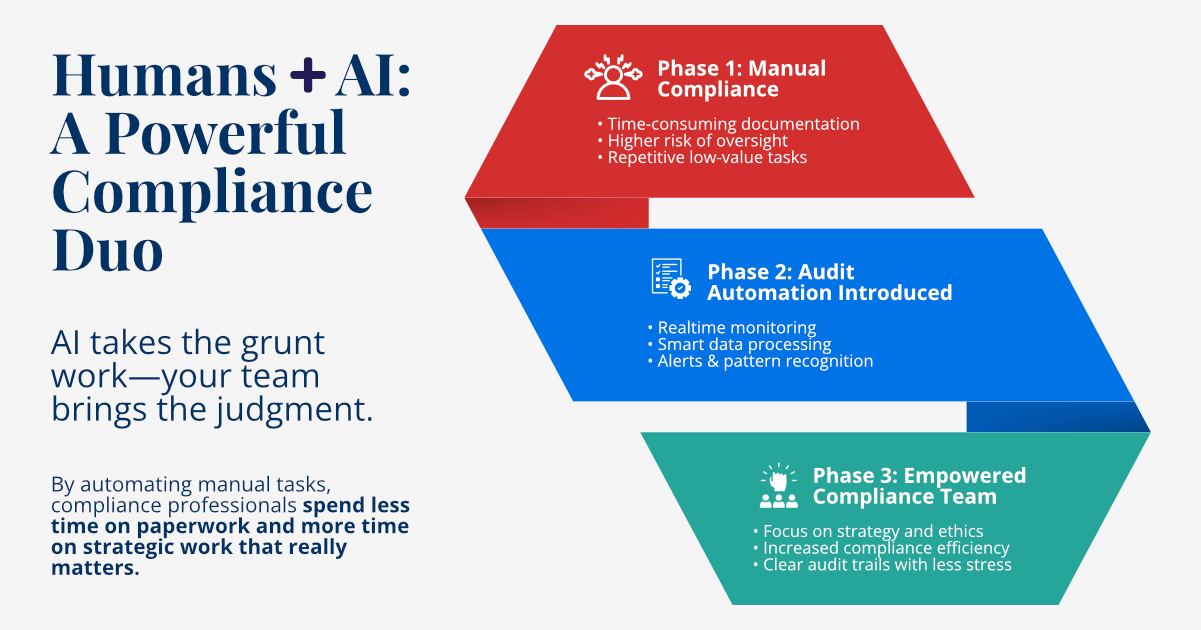
In the rapidly evolving landscape of compliance and audit management, AI-powered automation is often misunderstood as a replacement for human expertise. In reality, the most successful programs use automation as an enabler—augmenting human judgment, reducing manual burden, and giving teams more time for high-value strategic work.
When repetitive, data-heavy tasks are automated, compliance professionals can focus on interpretation, stakeholder communication, and forward-looking risk management. Rather than diminishing the role of the team, automation elevates it.
Key Benefits for Compliance Teams
Well-designed automation delivers tangible benefits for audit and compliance teams across workload, decision quality, and engagement.
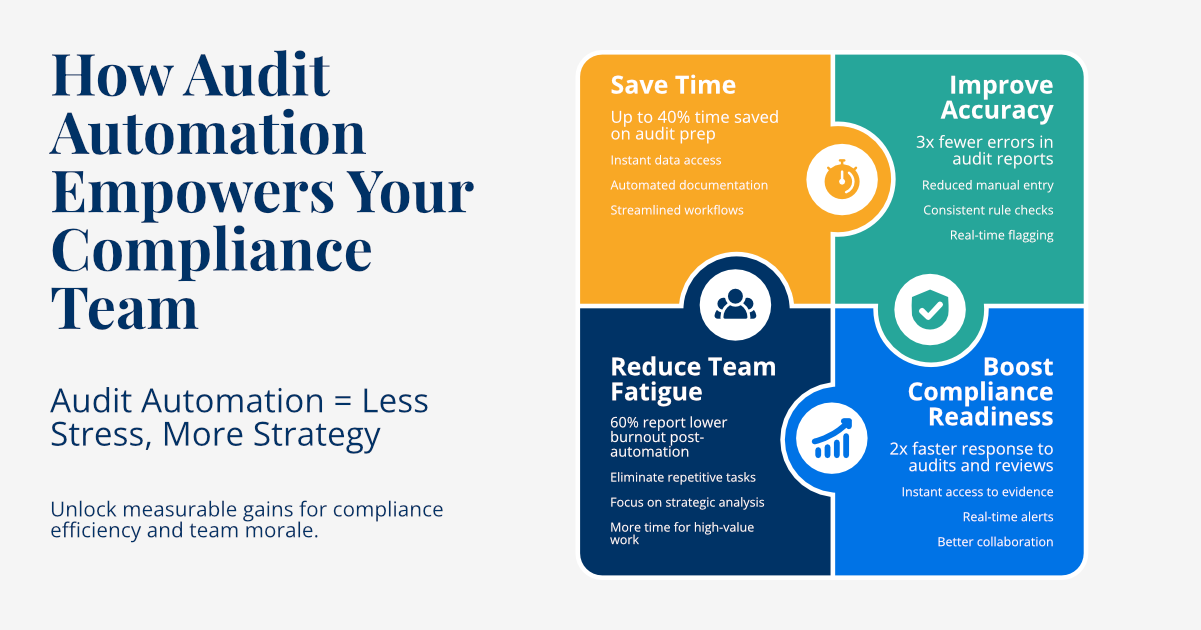
- Reduced Manual Workload: Routine activities—such as evidence collection, control testing, and reconciliations—can be automated, freeing teams to focus on complex analysis and strategic initiatives.
- Stronger Decision Support: AI-driven analytics surface patterns, anomalies, and outliers that might be missed manually, giving teams better data for judgment calls and recommendations.
- Improved Work-Life Balance: By shrinking the volume of urgent, last-minute manual work before audits, automation helps reduce burnout and create more sustainable workloads.
- New Growth Opportunities: As time shifts away from admin tasks, team members can develop new skills in data interpretation, stakeholder management, and risk strategy.
Implementation Strategies for Team Success
Embedding automation into day-to-day audit work is as much about change management as it is about tools. A people-first approach helps ensure adoption and long-term impact.
- Comprehensive Training: Provide practical training on new workflows and tools, including real examples from current audits, so team members feel confident and supported.
- Clear Communication of Benefits: Explain how automation reduces low-value tasks, improves data quality, and creates space for more interesting, strategic work.
- Gradual Rollout: Start with a few high-impact use cases, gather feedback, and iterate before expanding automation across all audits and regions.
- Ongoing Support and Feedback Loops: Keep channels open for questions, refinement ideas, and pain points so that processes and tools can be continuously improved.
Team Outcomes When Automation Works
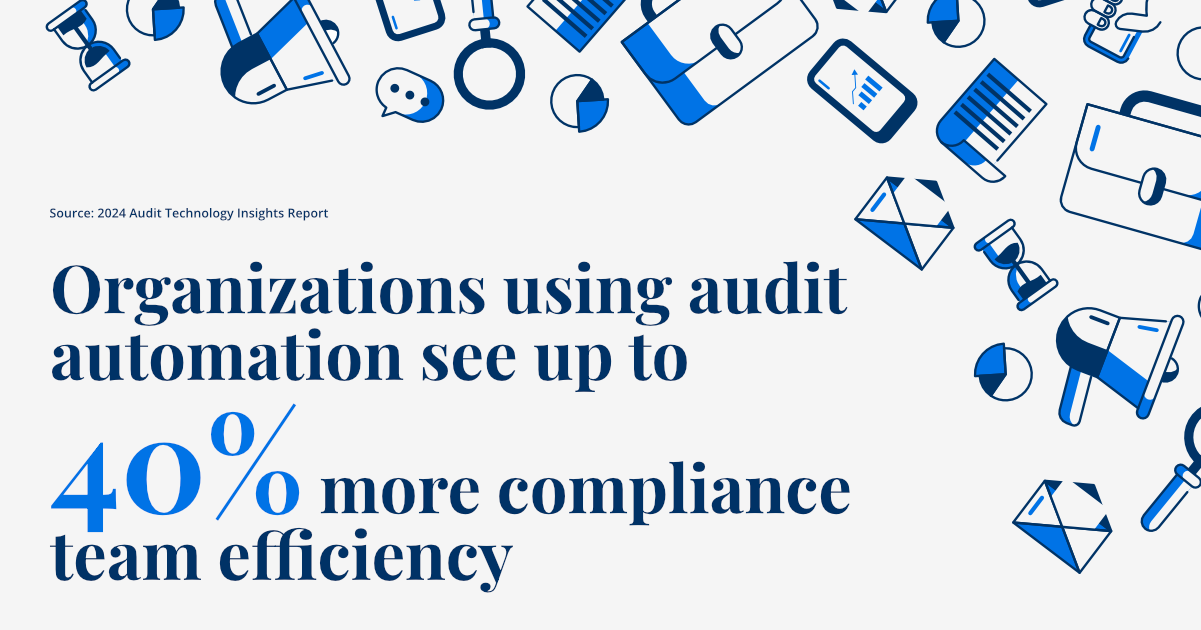
Organizations that successfully blend human expertise with automation report meaningful improvements in both performance and morale.
- Fewer Manual Tasks: A large portion of time-consuming preparation and documentation work is removed from day-to-day responsibilities.
- Higher Satisfaction: Teams report greater job satisfaction when they can focus on judgment, advising the business, and meaningful problem solving.
- More Strategic Focus: Audit and compliance professionals can dedicate more time to forward-looking risk themes, emerging regulations, and control design.
- Improved Work Quality: With fewer distractions and better data, the quality and consistency of findings, recommendations, and reports improves.
Conclusion: Automation That Puts People First
The real promise of audit automation is not to replace people, but to give them better tools, better data, and more time to do the work that matters most. When implemented thoughtfully, automation turns compliance teams into strategic partners for the business—shifting their role from checklist execution to insight generation and risk leadership.
Organizations that put the human side of automation at the center of their programs see stronger adoption, better outcomes, and more resilient audit functions ready for the next wave of regulatory and operational change.